SOBRIUS
Creator
Community-driven sobriety tracker
The Problem
People navigating sobriety had very few digital tools that actually felt supportive.
Existing options were either clinical recovery apps (cold, transactional, and overly medicalized) or generic habit trackers with no understanding of the emotional weight behind each sober day.
Neither offered meaningful community connection, which research consistently shows is one of the strongest predictors of long-term recovery success.
There was no app that combined personal progress tracking with the warmth, anonymity, and peer encouragement of recovery communities like AA and NA in a modern, mobile-first format.
The Process
User Research: Studied what makes in-person support groups effective and how those dynamics could translate into a digital experience. Interviewed people at various stages of recovery to understand daily triggers, motivation patterns, and what support actually looks like in practice.
Design Principles: Built the entire experience around three pillars: milestone celebration, social accountability, and emotional safety.
Gamification Design: Created a streak-based progression system calibrated for sensitivity — celebrating progress without creating shame around relapses.
Community Mechanics: Designed anonymous sharing so users could post updates, celebrate milestones, and offer encouragement without exposing their identity.
Visual Language: Created a warm, approachable aesthetic using soft gradients and encouraging copy that deliberately avoided clinical or medical aesthetics.
The Solution
A mobile application built around three core experiences:
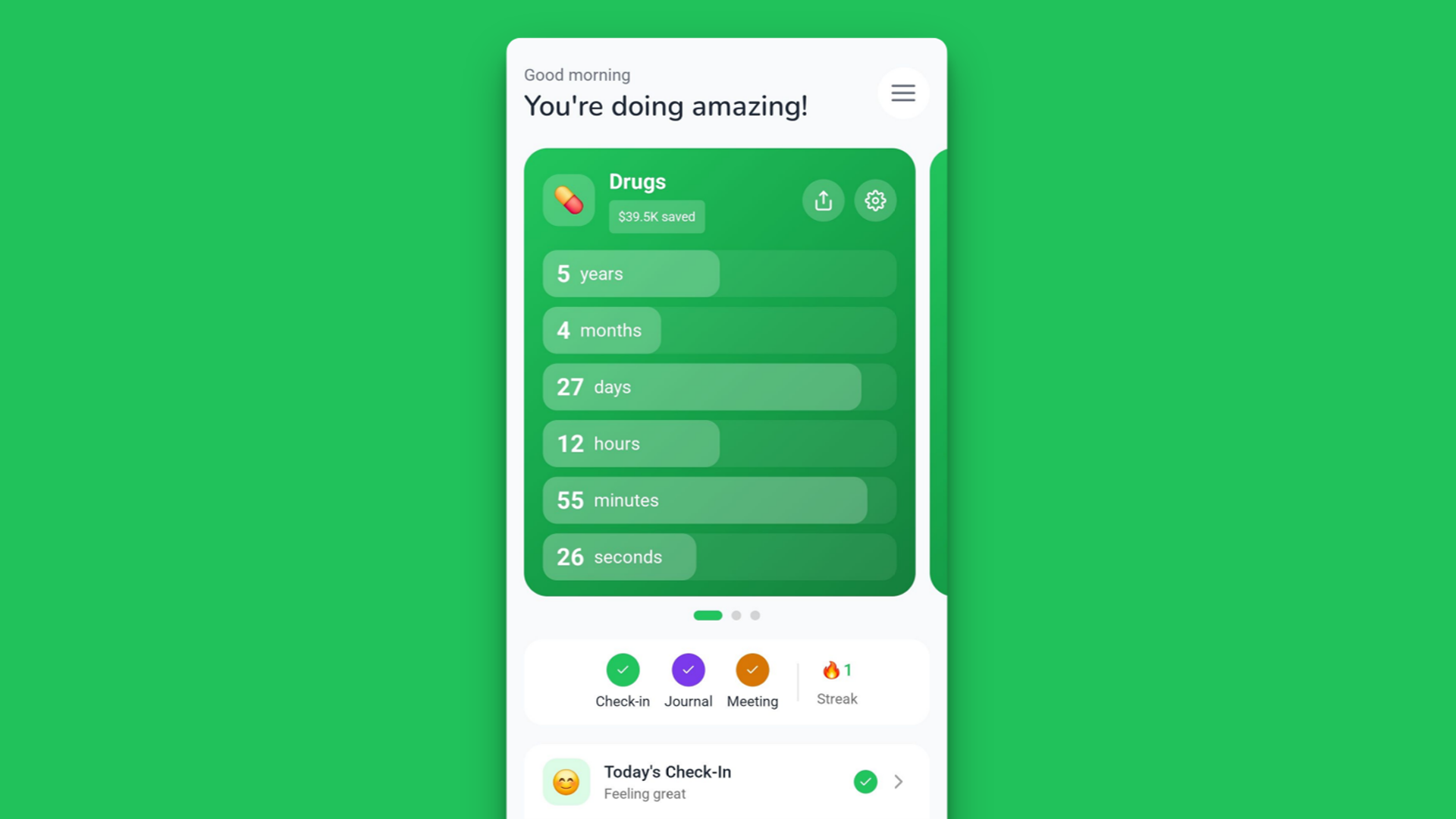
Personal sobriety tracking with milestone celebrations, badges, and progress visualizations
Anonymous community support where users share progress, react, and encourage peers without exposing identity
Daily reflection system with mindful check-ins and journaling prompts
Calibrated push notifications: Milestone congratulations and gentle check-ins at psychologically optimal times
The visual design is intentionally warm and human — the app feels like a supportive friend, not a medical tool.
The Outcome
Delivered a production-ready mobile application that reimagines digital recovery support
The milestone-driven design created natural moments of celebration that increased daily engagement and return rates
The anonymous community layer successfully replicated peer support dynamics of in-person recovery groups in a mobile-first format
Demonstrated that thoughtful UX design can transform a sensitive health topic into an engaging, stigma-free digital experience
Key Product Decisions
Centered the product around community connection rather than solo tracking — peer support is the strongest predictor of long-term recovery
Designed gamification that celebrates progress without punishing setbacks — a critical distinction for recovery contexts
Chose anonymous sharing over identity-based profiles to maximize emotional safety and participation
Used warm visual design instead of clinical aesthetics to reduce stigma and increase daily engagement
What I Would Do Next
Add therapist/sponsor integration so professional support can connect directly within the app
Build group milestones to strengthen community bonds and collective accountability
Introduce mood tracking and journaling analytics to help users identify patterns in their recovery journey
Role
Creator
Skills & Tools